
Planning your wedding means making dozens of decisions. One of the most important? Your catering.
The food you serve shapes how your guests remember your celebration. It sets the tone, creates conversation, and brings people together during one of the most meaningful days of your life.
But wedding catering comes with questions. How much does it actually cost? What’s included in the price? Why does it feel so expensive? And how do you find a caterer who delivers on their promises?
We’ve catered hundreds of weddings across Orange County, Los Angeles County, Riverside County, and San Bernardino County. We’ve seen what works, what doesn’t, and what couples wish they’d known before signing contracts.
This guide answers your most pressing questions with real numbers, honest advice, and practical insights. You’ll walk away knowing exactly what to expect and how to make smart decisions for your budget and vision.
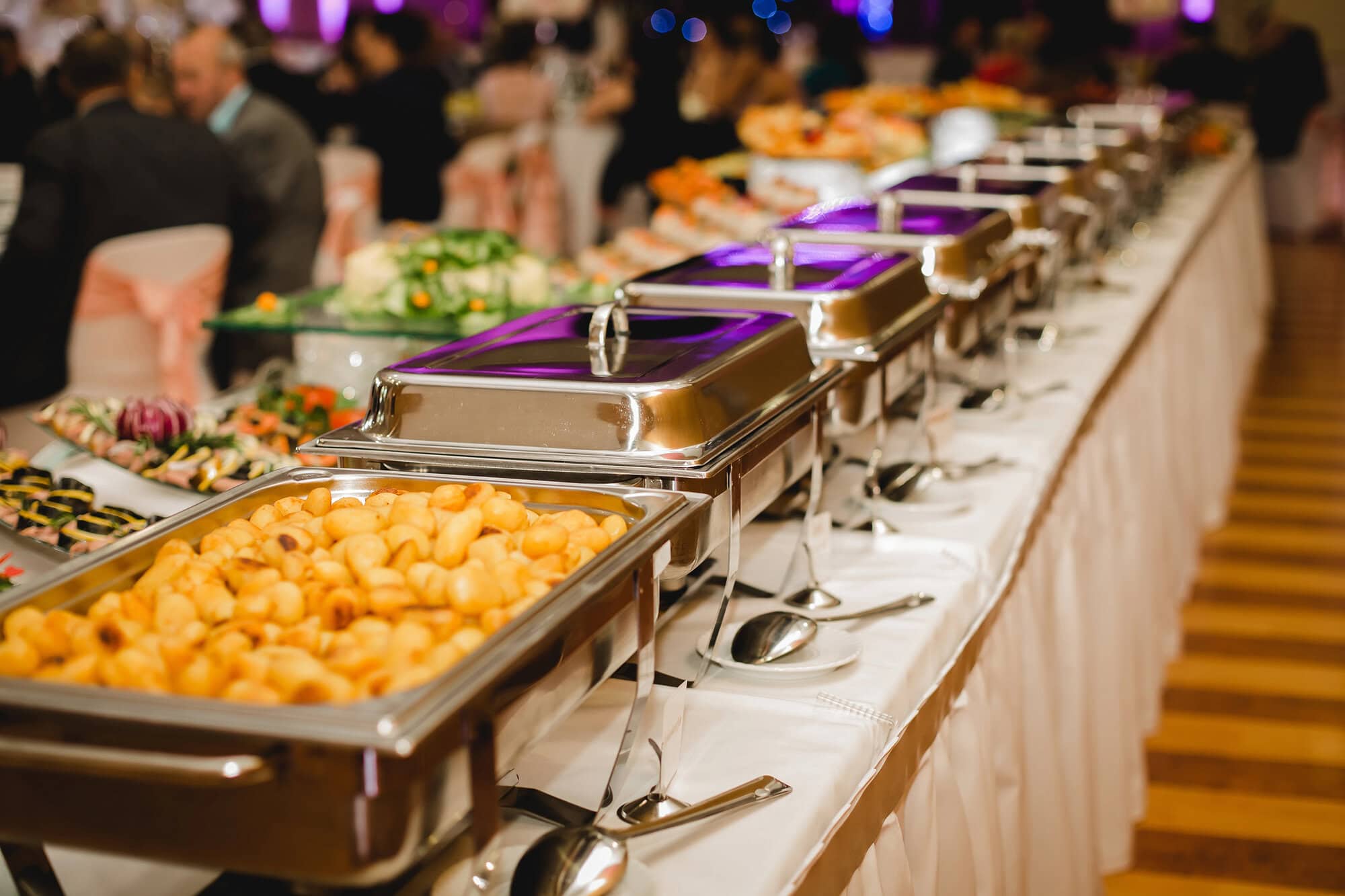
How Much Does Wedding Catering Actually Cost?
Let’s start with the question everyone asks first: what will this cost me?
The honest answer? It depends on your guest count, service style, menu choices, and location. But we can give you real numbers to plan with.
Wedding Catering Cost by Guest Count
Here’s what couples typically invest in Southern California wedding catering:
For 50 guests: Budget-conscious: $2,500–$4,000 Mid-range: $4,000–$7,500 Premium farm to table: $7,500–$12,000
For 100 guests: Budget-conscious: $5,000–$8,000 Mid-range: $8,000–$15,000 Premium farm to table: $15,000–$25,000
For 150 guests: Budget-conscious: $7,500–$12,000 Mid-range: $12,000–$22,500 Premium farm to table: $22,500–$37,500
For 200 guests: Budget-conscious: $10,000–$16,000 Mid-range: $16,000–$30,000 Premium farm to table: $30,000–$50,000
These ranges reflect full-service catering with professional staff, quality ingredients, and complete setup and cleanup.
What Affects Your Per-Person Price?
Your final cost depends on several factors:
Service style matters. Plated dinners cost more than buffets because they require more staff and precise timing. Family-style service falls somewhere in between.
Ingredients drive price. Seasonal produce from local farms costs more than warehouse vegetables. Wild-caught salmon runs higher than farmed fish. Grass-fed beef from Armstrong Ranch carries a premium over commodity meat.
Staffing requirements add up. Professional servers, bartenders, and kitchen staff aren’t optional for smooth execution. Your guest count determines how many team members you need.
Rentals and equipment matter. China plates, glassware, linens, and chafing dishes all factor into your total. Some venues provide these. Others don’t.
Timing and season play a role. Saturday evenings in June cost more than Thursday afternoons in February. Peak wedding season means higher demand for quality caterers.
We’ve fed NBA champions and 200-guest backyard celebrations. The principles don’t change. Quality ingredients prepared with care and served by professionals who respect your day.
Why Is Wedding Catering So Expensive?
You’re not imagining it. Wedding catering costs more than a restaurant meal or a casual dinner party.
Here’s why:
You’re Paying for Perfection Under Pressure
Restaurants serve meals throughout the night. They can adjust timing if the kitchen falls behind.
Wedding caterers have one shot. Every plate must hit the table at the exact right moment. No do-overs. No second chances.
That precision requires experience, backup plans, and professional systems. It’s the same pressure we learned feeding professional athletes on game days. Everything has to be perfect when it matters most.
Quality Ingredients Cost More Than You Think
We source our produce from JR Organics and Armstrong Ranch. These farms grow vegetables without harmful pesticides. They harvest at peak ripeness, not for shelf life.
That heirloom tomato bursting with flavor? It costs three times what a warehouse tomato costs. But your guests taste the difference immediately.
Commodity catering uses frozen proteins, canned vegetables, and pre-made sauces. It’s cheaper. It’s also forgettable.
Real farm to table catering builds menus around what’s actually in season. That takes relationships with farmers, flexible menu planning, and a commitment to quality over convenience.
Professional Staff Makes Your Event Run Smoothly
Your catering cost includes trained servers who know how to work a wedding. They anticipate needs, handle problems quietly, and keep your guests comfortable.
Budget caterers cut staff to save money. You end up with long buffet lines, empty water glasses, and tables that don’t get cleared.
We’ve worked luxury corporate events for Mercedes and BMW. We’ve catered for political leaders and celebrity clients. Professional service isn’t optional. It’s how we guarantee you can relax and enjoy your own celebration.
Behind-the-Scenes Work You Don’t See
Here’s what happens before your first guest arrives:
We visit your venue to plan logistics. We test recipes and prepare ingredient lists. We coordinate with your other vendors. We pack and transport everything needed for service.
We arrive hours early to set up your space. We prep ingredients on-site to ensure freshness. We manage timing so your appetizers, dinner, and desserts flow seamlessly.
After your last guest leaves, we break down the entire operation and restore your venue to its original condition.
You see three hours of service. We put in three days of planning and preparation.
Insurance, Licensing, and Overhead
Professional caterers carry liability insurance that protects you if something goes wrong. We maintain food handler certifications and health permits. We pay workers’ compensation insurance for our staff.
Those aren’t optional expenses. They’re what separates legitimate catering companies from risky alternatives.
We also maintain professional kitchens, refrigerated transport, and backup equipment. These overhead costs get built into our pricing.
You’re not just buying food. You’re buying peace of mind that everything will work exactly as promised.
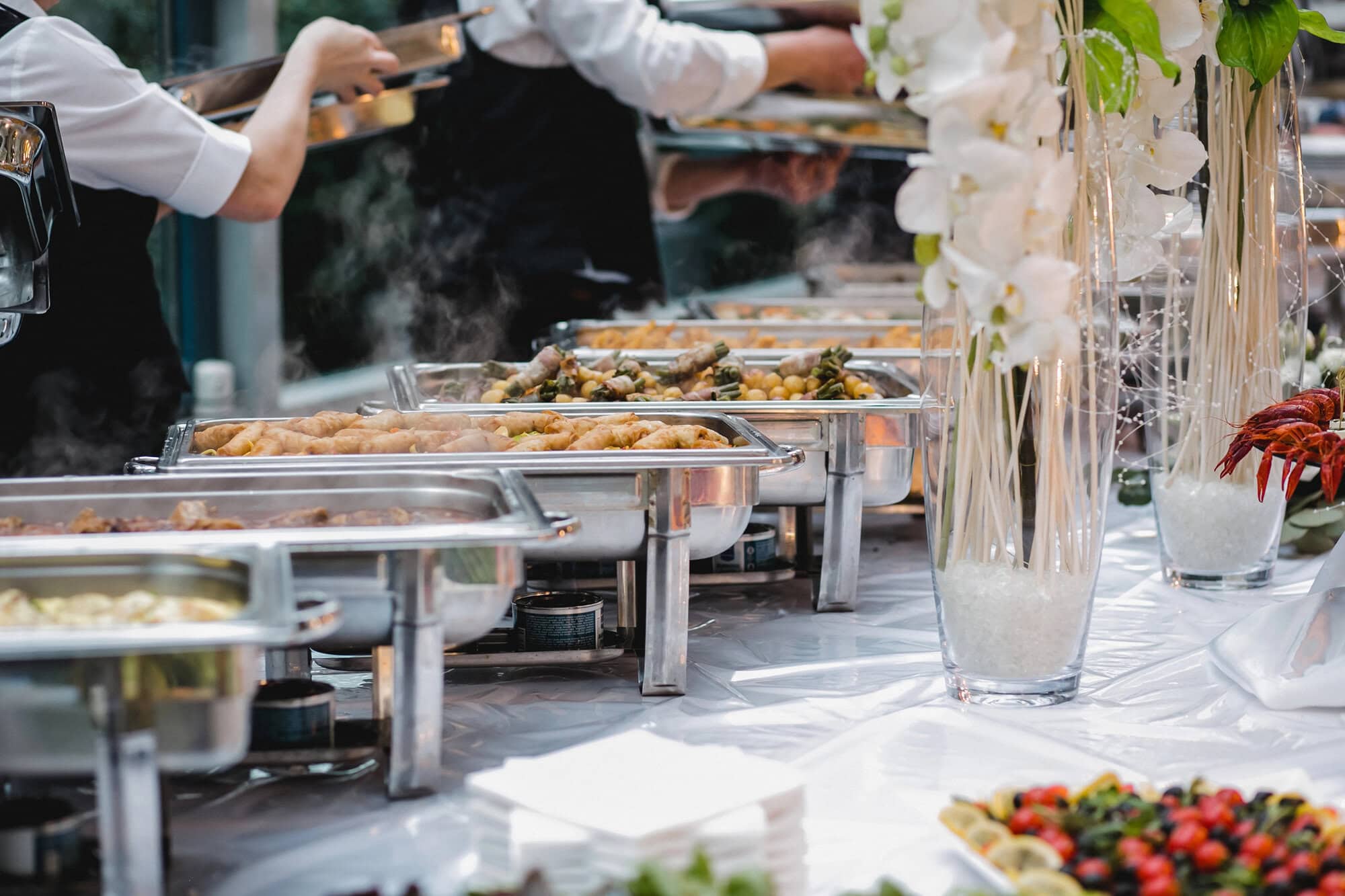
What Does Wedding Catering Include?
Not all catering packages offer the same services. Here’s what you should expect and what often costs extra.
Standard Full-Service Catering Includes:
Menu planning and customization. We work with you to design a menu that reflects your tastes, accommodates dietary needs, and fits your budget. For inspiration, browse our unique catering ideas for weddings.
Professional staff. Servers, bartenders, and kitchen support staff who arrive early, work professionally, and stay until cleanup is complete.
Food preparation and service. We handle every aspect of cooking and presenting your meal, from appetizers through dessert.
Setup and breakdown. We arrive hours before your event to set up your space. We stay after to restore everything to its original condition.
Basic serving equipment. Chafing dishes, serving utensils, and the tools needed to present and maintain your food throughout service.
Coordination with venue and vendors. We communicate with your venue, wedding planner, photographer, and other vendors to ensure smooth timing.
What Often Costs Extra:
Rentals. China plates, silverware, glassware, linens, and tables usually come from rental companies. Some caterers include these. Others don’t.
Bar service and alcohol. Some caterers provide full bar service and beverages. Others only handle food. Make sure you understand what’s covered.
Service charges and gratuity. Many caterers add 18–22% service charges and gratuities on top of food costs. Ask for the total out-the-door price.
Cake cutting fees. If you’re bringing in a cake from an outside baker, some caterers charge to cut and serve it.
Specialty equipment. Outdoor cooking equipment, carving stations, or specialty presentation items may carry additional fees.
Overtime charges. If your reception runs longer than contracted, expect hourly charges for extended staff time.
Our Approach to Transparency
We provide detailed proposals that break down every cost. You’ll see exactly what you’re paying for: ingredients, staff, rentals, and any additional services.
We don’t hide fees in fine print. We don’t surprise you with last-minute charges. We learned from working with professional athletes and corporate clients that trust starts with clear communication.
Ask your caterer for a complete itemized proposal. If they can’t or won’t provide one, that’s a red flag.
Can You Negotiate Wedding Catering Prices?
Yes, but probably not the way you think.
What You Can Negotiate
Service style changes. Switching from plated service to buffet-style service reduces staffing costs. Family-style service often falls somewhere in between.
Menu adjustments. Choosing seasonal ingredients costs less than requesting off-season items. Adjusting protein selections can significantly impact your budget.
Guest count reductions. Obviously, fewer guests means lower costs. But it also improves your per-person budget if you’re locked into a specific total.
Day and timing flexibility. Friday or Sunday weddings often cost less than Saturday celebrations. Brunch or lunch receptions typically run lower than dinner events.
Package customization. You might eliminate cocktail hour, reduce appetizer selections, or simplify dessert options to hit your target budget.
What You Can’t Negotiate
Quality ingredients. We won’t swap Armstrong Ranch grass-fed beef for commodity meat to save money. Our farm to table commitment isn’t negotiable.
Professional staffing. Cutting servers to reduce costs creates problems for everyone. We maintain ratios that ensure excellent service.
Insurance and permits. These protect you and your guests. We won’t cut corners on safety and legality.
Our expertise and reputation. We’ve built our business on reliability and execution. We won’t risk your celebration to win a contract.
The Smart Way to Work Within Your Budget
Instead of asking for discounts, have an honest conversation about your budget before menu planning begins.
We can design a beautiful meal at almost any price point if we know your constraints upfront. But we can’t retrofit an expensive menu into a limited budget without sacrificing something.
Tell us what matters most. Is it the cocktail hour? The main course? The dessert display? We’ll focus your budget where it creates the biggest impact.
We’ve catered intimate 30-person gatherings and 200-guest galas. Beautiful celebrations happen at every budget level when you work with professionals who understand both quality and value.
Are Wedding Catering Tastings Free?
It depends on the caterer and how serious you are about booking.
Our Tasting Policy
We charge for tastings, but if you book with us, we credit that cost back to your final invoice.
Here’s the reality: A proper tasting requires us to special-order ingredients from our restaurant suppliers. We have to “will call” fresh seafood, premium meats, and seasonal produce to get the exact ingredients we’d use for your wedding.
Our vendors have minimum delivery requirements. We can’t just grab a few items from the grocery store and call it representative. Grocery store chicken isn’t the same as what we source from our purveyors. The salmon at the supermarket doesn’t compare to what comes off the truck from our seafood supplier.
A tasting takes significant time and specific sourcing to replicate what your guests will actually experience. It’s not about making money, it’s about ensuring you taste the real thing, prepared exactly as it would be for your reception.
If you hire us, you get that tasting fee back. If you choose another caterer, the fee covers the actual cost of providing you with restaurant-quality ingredients and professional preparation.
What to Expect at a Catering Tasting
You’ll taste actual menu items. We prepare small portions of dishes you’re considering for your reception. You’ll experience the flavors, textures, and presentation exactly as your guests will, using the same ingredients from the same suppliers.
Bring your partner. Both people getting married should attend. You’ll need to agree on menu choices, and tasting together avoids miscommunication.
Come hungry but not starving. You’ll taste multiple dishes. Arrive ready to focus on flavors without being distracted by hunger.
Take notes. You’ll sample several items. Write down your reactions so you remember which dishes you loved and which didn’t work.
Ask questions. This is your chance to understand ingredients, sourcing, preparation methods, and how we’d adapt dishes for dietary restrictions.
Red Flags with Tastings
Caterers who won’t do tastings at all. If they won’t let you taste their food before booking, that should concern you.
Caterers who offer “free” tastings but use inferior ingredients. If they’re pulling ingredients from the grocery store instead of their actual suppliers, you’re not tasting what your guests will eat.
Tastings that feel rushed. Quality caterers make time for thorough tastings. If you feel hurried, they may not prioritize your experience.
Food that doesn’t match photos or promises. What you taste should match what they’ve shown you and discussed. Bait-and-switch is unacceptable.
We’ve won business and lost business based on tastings. We’re confident in our food because we source ingredients we believe in and prepare them with techniques developed through years of professional training. The tasting fee ensures you experience the real thing, not a grocery store approximation.
Understanding Wedding Catering Service Styles
The way food gets served dramatically affects your budget, timeline, and guest experience.
Plated Service
What it is: Guests sit at assigned tables. Servers bring individually plated meals to each person, restaurant-style.
Advantages:
- Formal, elegant presentation
- Precise portions control food costs
- Accommodates dietary restrictions easily
- Keeps guests seated and socializing
Disadvantages:
- Highest staffing requirements
- Slower service means longer reception timeline
- Less flexibility for picky eaters
- More expensive than other options
Best for: Formal weddings, elegant venues, couples who want traditional reception structure.
Cost: Expect the highest per-person pricing due to intensive labor and plating requirements.
Buffet Service
What it is: Food stations where guests serve themselves from larger presentations.
Advantages:
- Lower staffing costs than plated service
- Guests control their own portions
- Visual appeal with abundant food displays
- Faster service for large groups
Disadvantages:
- Lines can create bottlenecks
- Food presentation gets messy as service continues
- Requires more food to maintain full displays
- Less formal atmosphere
Best for: Casual celebrations, large guest counts, outdoor venues, budget-conscious couples.
Cost: Typically 20–30% less than plated service due to reduced staffing needs.
Family-Style Service
What it is: Servers place large platters of food on each table. Guests pass dishes and serve themselves, like a family dinner.
Advantages:
- Creates communal, warm atmosphere
- Less formal than plated, more elegant than buffet
- No lines or waiting
- Moderate staffing requirements
Disadvantages:
- Requires larger tables with space for platters
- Food distribution can be uneven
- Doesn’t work well for dietary restrictions
- Some guests take too much, others get too little
Best for: Intimate weddings, guests who know each other, couples who want communal dining experience.
Cost: Falls between buffet and plated pricing, depending on menu complexity.
Stations and Action Stations
What it is: Multiple food stations positioned around your venue, sometimes with chefs preparing items to order.
Advantages:
- Encourages guest movement and mingling
- Entertainment value with live cooking
- Variety of food options in one event
- Works well for cocktail-style receptions
Disadvantages:
- Requires significant space
- Higher staffing costs for multiple stations
- Can feel chaotic if not well-planned
- Not suitable for formal sit-down receptions
Best for: Cocktail receptions, modern celebrations, venues with multiple rooms, couples who want interactive experiences.
Cost: Varies widely based on station complexity and live cooking requirements.
Our Recommendation
We’ve executed every service style successfully. The right choice depends on your venue, guest count, budget, and vision.
For most couples, family-style service offers the best balance. It feels warm and communal without the formality of plated service or the chaos of buffet lines.
But we’ve catered elegant plated dinners at Eagle Glen Golf Club and casual buffets at backyard celebrations. Excellence comes from execution, not service style.
Tell us about your celebration. We’ll recommend what works best for your specific situation.
When Should You Book Your Wedding Caterer?
Book your caterer as soon as you’ve secured your venue. Ideally 9 to 12 months before your wedding date.
Here’s why timing matters:
Popular Dates Fill Up Fast
Saturday evenings during peak season (May through October in Southern California) book first. Quality caterers only take one event per day to ensure perfect execution.
If you’re planning a wedding during peak season, caterers get booked 12–18 months in advance.
Menu Planning Takes Time
Creating your custom menu, scheduling tastings, and finalizing details takes several weeks minimum. Rushing this process leads to generic menus and missed opportunities.
We build menus around seasonal ingredients. If you book early, we can plan around what’s going to be fresh and available on your wedding date.
Venue Coordination Requires Advance Notice
Some venues have preferred caterer lists. Others allow outside catering but require insurance certificates and facility agreements.
These administrative details take time to coordinate. Starting early prevents last-minute scrambling. Click here if you’re wondering what wedding venues are near Corona. We wrote a detailed list of all the venues you might want to consider.
Your Other Vendors Need to Coordinate
Your photographer needs to know dinner timing for schedule planning. Your DJ needs to coordinate with our service for announcements. Your florist needs to know table layouts before designing centerpieces.
Catering affects almost every other vendor’s timeline. Booking early allows proper coordination.
What Happens If You Wait Too Long?
Your first-choice caterers may be booked. You’ll have fewer options and less negotiating flexibility.
You might get stuck with whatever caterer is available rather than the one you actually want.
Rushed planning leads to generic menus, overlooked dietary needs, and last-minute stress you don’t need before your wedding.
The Booking Process Timeline
9–12 months before: Research caterers, read reviews, check portfolios.
8–11 months before: Schedule initial consultations with your top 2–3 choices.
7–10 months before: Attend tastings and request detailed proposals.
6–9 months before: Book your caterer and sign your contract.
3–6 months before: Finalize menu details and dietary accommodations.
1–2 months before: Confirm final guest count and timeline.
1–2 weeks before: Last-minute details and day-of coordination.
We’ve accommodated couples who called us six weeks before their wedding. But early booking gives us time to create something truly special rather than just executing a standard menu.
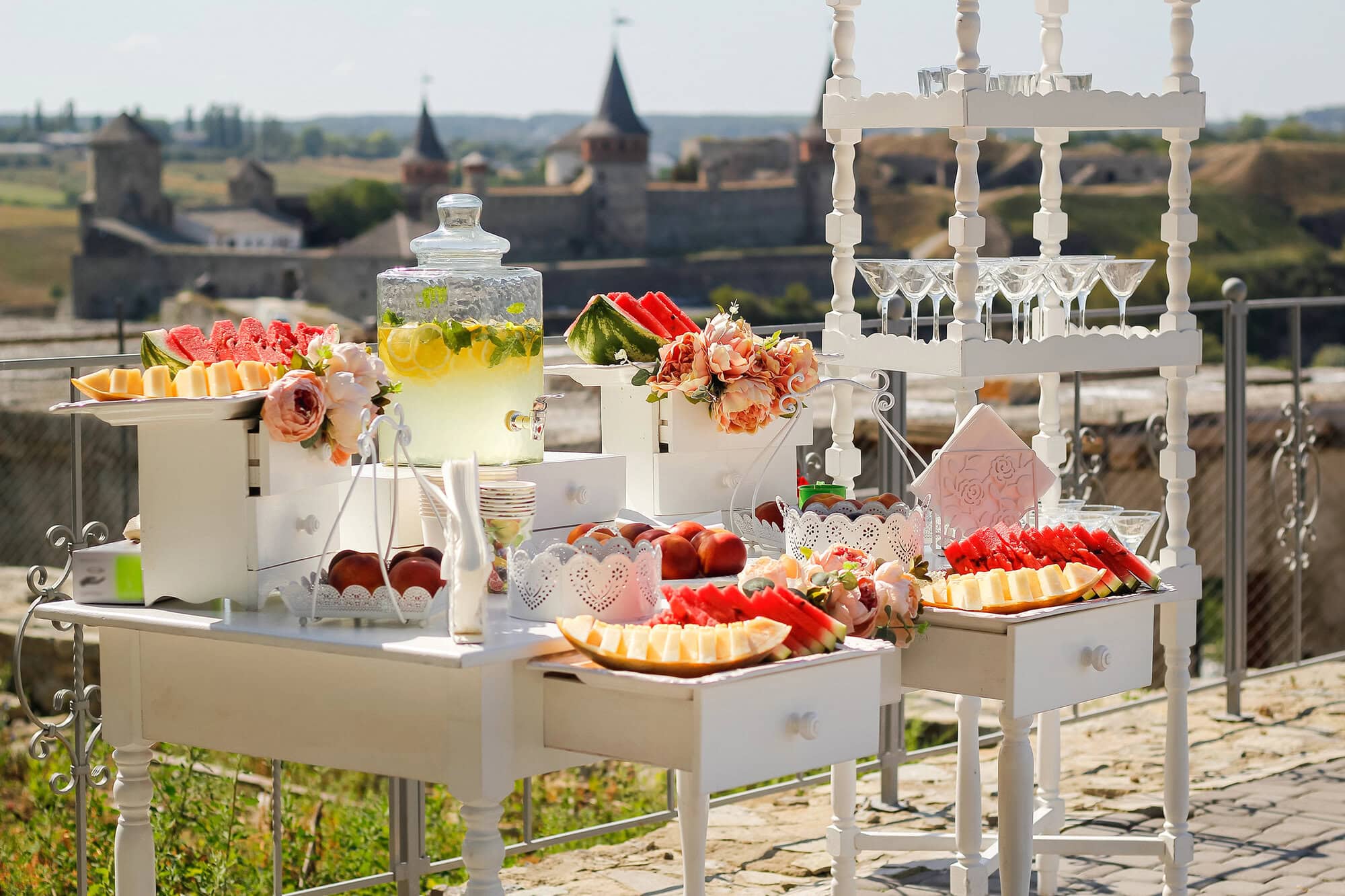
What Makes Wedding Catering Worth the Investment?
You’re spending thousands of dollars on food and service. What exactly are you getting for that investment?
Memories Your Guests Take Home
Your guests will forget the color of your napkins. They’ll forget the specific flowers in your centerpieces.
They’ll remember the food. They’ll remember whether they felt cared for, whether the service was smooth, and whether the meal matched the elegance of your celebration.
We’ve had guests talk about our citrus-glazed salmon for years. We’ve had couples tell us their families still mention the dessert display.
Food creates conversation, connection, and lasting memories.
One Less Thing to Worry About
Your wedding day moves fast. You’ll barely have time to breathe, much less micromanage vendors.
Professional catering means you don’t worry about timing, setup, dietary restrictions, or cleanup. We handle everything so you can focus on marrying your partner and celebrating with your guests.
That peace of mind is priceless.
Professional Execution When It Matters Most
We’ve fed NBA champions before playoff games. We’ve catered corporate events for Fortune 500 companies. We’ve served private dinners where every detail had to be perfect.
That experience shows up on your wedding day. We anticipate problems before they happen. We adjust on the fly when things change. We execute with the precision developed through years of high-stakes events.
From your first dance, to your vows and your celebration photos, all happen once. Our job is making sure the food and service don’t distract from those moments.
Supporting Local Farms and Ethical Sourcing
When you choose farm to table catering, you’re supporting Southern California farmers who grow food responsibly.
Armstrong Ranch raises grass-fed beef humanely. JR Organics grows produce without harmful pesticides. These farmers care about their land, their animals, and their community.
Your catering budget supports that work. It’s an investment in your health, your celebration, and your local food system.
How to Choose the Right Wedding Caterer
You’ve got dozens of catering options across Southern California. How do you choose the right one?
Start with These Essential Questions
How long have you been catering weddings? Experience matters. You want a caterer who’s handled events your size, your style, and your complexity level.
Can we see photos from recent weddings? Not stock photos from their website. Recent events that show current food quality and presentation.
What’s your relationship with your ingredient suppliers? Generic answers reveal generic sourcing. Specific farm names and relationships indicate real farm to table commitment.
How many events do you book per day? Quality caterers book one event per day maximum. Multiple events mean divided attention and quality compromises.
What happens if something goes wrong on our wedding day? Professional caterers have contingency plans. They should explain backup systems without hesitation.
Can you accommodate dietary restrictions? Gluten-free, vegan, kosher, or allergy accommodations should be standard, not special requests.
Red Flags to Watch For
Vague answers about ingredients. If they can’t tell you where food comes from, they’re probably using commodity suppliers.
Reluctance to provide references. Happy couples love recommending great caterers. Hesitation suggests problems.
Pushy sales tactics. Professional caterers earn business through quality, not pressure.
Unclear contracts. Every cost, service, and expectation should be explicitly documented.
Poor communication. If they’re slow to respond before you’ve paid, they’ll be worse after you’ve signed.
No insurance or licensing. This puts you at legal and financial risk if something goes wrong.
What Sets Us Apart
We bring ten years of championship-level execution to every celebration.
We sourced meals for NBA champions including Klay Thompson, NFL All-Pro Jared Goff, and Major League teams like the LA Dodgers and LA Rams. That taught us precision, reliability, and performance under pressure.
We maintain genuine relationships with local Southern California farms. Armstrong Ranch, JR Organics, and other partners supply seasonal ingredients we build our menus around.
We’ve catered luxury corporate events for Mercedes and BMW, political fundraisers for leaders including Hillary Rodham Clinton, and celebrity celebrations for TNT’s Kenny Smith. We’ve also catered hundreds of weddings for couples who trusted us with one of the most important days of their lives.
You get both: farm-fresh ingredients and championship-level execution. Most caterers offer one or the other. We deliver both.
Common Wedding Catering Mistakes to Avoid
We’ve seen couples make the same mistakes repeatedly. Here’s how to avoid them:
Mistake #1: Choosing the Cheapest Option
Budget matters. But the cheapest caterer often delivers generic food, minimal staff, and preventable problems.
You can’t get quality ingredients, professional service, and reliable execution at rock-bottom prices. Something has to give.
Focus on value instead of price. What are you actually getting for your investment?
Mistake #2: Forgetting About Service Staff
Your food can be amazing. But if you don’t have enough servers, your guests wait in long lines, tables don’t get cleared, and your timeline falls apart.
Ask about staffing ratios. One server per 15–20 guests is standard for plated service. Buffets need fewer servers but more kitchen support.
Mistake #3: Not Planning for Dietary Restrictions
You’ll have guests with gluten sensitivities, vegan preferences, food allergies, or religious dietary requirements.
Ignoring these restrictions sends the message that some guests don’t matter. Professional caterers accommodate dietary needs without making special requests feel special.
Mistake #4: Skipping the Tasting
Some couples book caterers based on photos and reviews without tasting the actual food.
Photos lie. Reviews are subjective. Your own taste buds tell the truth.
Always attend a tasting before signing a contract.
Mistake #5: Underestimating Guest Count
You think 100 guests. You send 150 invitations. You end up with 135 people at your reception.
Underestimating your guest count creates problems for everyone. We need accurate numbers to purchase ingredients, staff appropriately, and set up your space.
Give us your best estimate, then update us as RSVPs come in. We’ll adjust accordingly.
Mistake #6: Not Reading the Contract
Contracts protect both parties. Read every line before signing.
Understand your deposit, payment schedule, cancellation policy, overtime charges, and what happens if your guest count changes.
Ask questions about anything unclear. Professional caterers explain their contracts without defensiveness.
Mistake #7: Forgetting About Your Own Meal
Brides and grooms often don’t eat at their own weddings. You’re too busy greeting guests, taking photos, and enjoying the moment.
Tell your caterer you want a private moment to actually eat. We’ll prepare plates specifically for you and make sure you have time to enjoy your meal together.
What to Expect on Your Wedding Day
Here’s what happens behind the scenes when we cater your celebration:
Before Your Guests Arrive
We arrive at your venue several hours early, typically 4–6 hours before your ceremony ends.
We unload equipment, set up our kitchen workspace, and begin final food preparation. We coordinate with your venue staff to ensure smooth access and setup.
We arrange your tables, set up buffet or family-style presentations, and do final checks on every detail.
Your wedding planner or coordinator walks us through the timeline. We confirm when appetizers should be ready, when dinner service starts, and when dessert gets served.
During Your Reception
While you’re celebrating, we’re working.
Professional servers circulate during cocktail hour with passed appetizers. Kitchen staff plates or prepares dishes according to your service style. We monitor food temperatures, presentation, and guest needs.
We coordinate with your DJ or band for dinner announcements. We pace courses so your guests aren’t rushed or waiting.
We clear tables between courses. We refresh water and beverages. We handle problems quietly so you never know they existed.
After Your Last Guest Leaves
We break down our entire operation and pack everything we brought. We restore your venue to its original condition.
We handle all trash removal and cleaning related to food service. We coordinate with the venue for any items they’re responsible for.
We typically leave 1–2 hours after your reception ends. You’ll never know we were there except for the memories of great food and seamless service.
Ready to Start Planning Your Wedding Catering?
You’ve got questions. We’ve got answers and over a decade of experience making celebrations unforgettable.
We serve couples across Orange County, Los Angeles County, Riverside County, and San Bernardino County. From Corona to Santa Monica, from Riverside to Newport Beach, we bring farm to table excellence and championship-level execution to every wedding.
Here’s What Happens Next
Step 1: Contact us to schedule a no-pressure consultation. We’ll discuss your vision, your venue, your guest count, and your budget. You can also check out our wedding catering service page for more info.
Step 2: If we seem like the right fit, we’ll schedule a tasting so you can experience our food firsthand.
Step 3: We’ll provide a detailed proposal that breaks down every cost and service. No surprises, no hidden fees.
Step 4: Once you’re ready, we’ll book your date and start planning your custom menu.
Step 5: We’ll handle everything from that point forward so you can relax and enjoy your engagement.
Let’s Create Something Unforgettable
Your wedding deserves food that matches the significance of the moment.
Food sourced from farmers we know by name. Prepared with techniques developed through classical training and professional experience. Served by a team that’s fed championship athletes and high-profile clients.
You get to be fully present for your own celebration. We’ll handle every detail.
Call us at (714) 878-5542 or email bill@chefbillblackburn.com to start planning your wedding catering.
Chef Bill Blackburn Farm to Table
Directions to our Office: 4300 Green River Rd STE 106 Corona, CA 92878
Farm to table flavor. Championship-level execution. Your celebration deserves both.